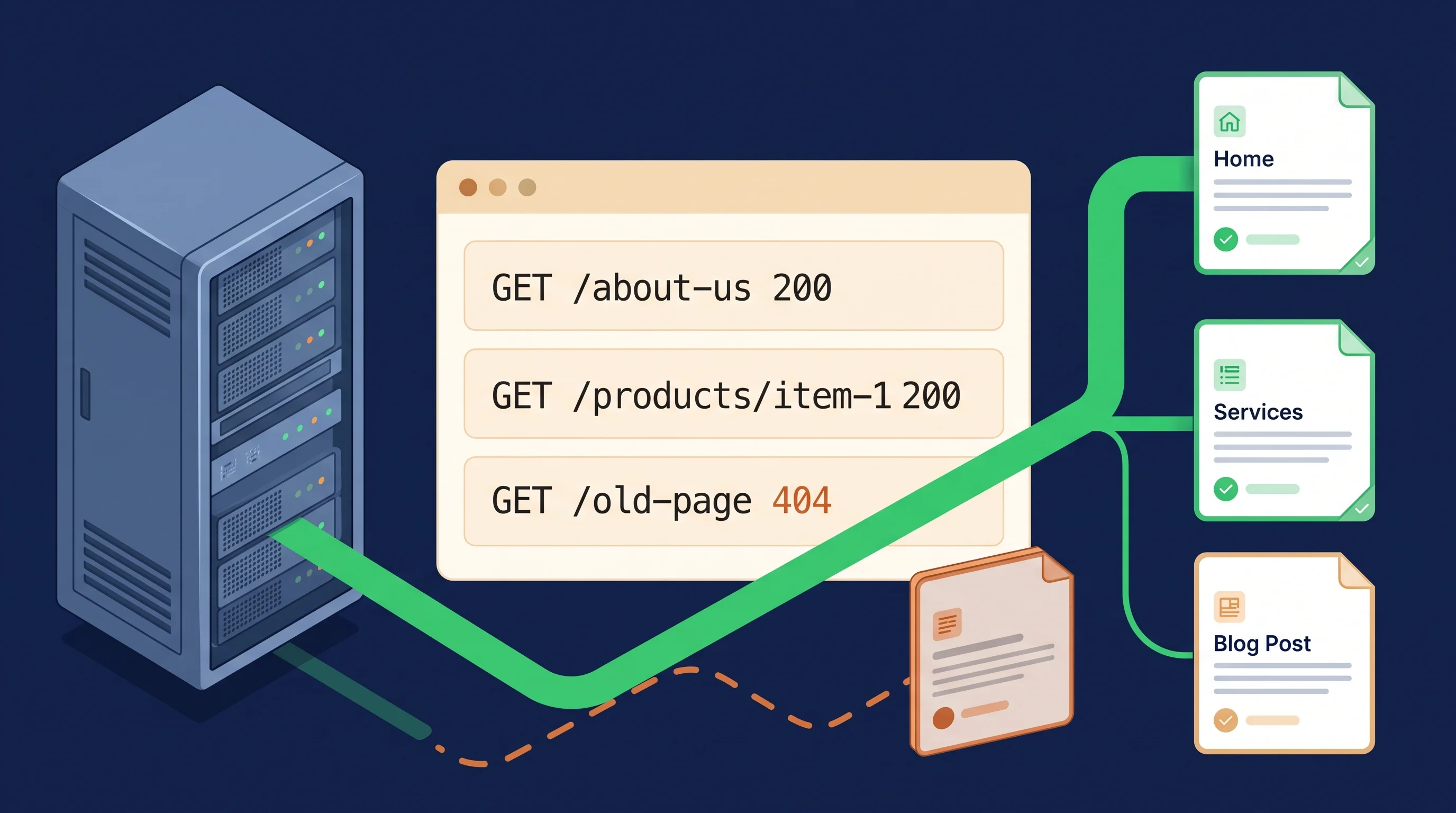
SEO Log File Analysis: Verify Googlebot and Find Crawl Gaps
A reproducible log analysis workflow: choose the capture layer, verify crawler identity, preserve the URL denominator and turn missing or failing requests into testable findings.
Metricum Lab knowledge base
Practical material for teams that need exact tools, thresholds, exports, implementation steps and primary sources—not generic SEO advice.
Long-form guides built for the full workflow: audit, implementation, handoff and verification.
A reproducible log analysis workflow: choose the capture layer, verify crawler identity, preserve the URL denominator and turn missing or failing requests into testable findings.
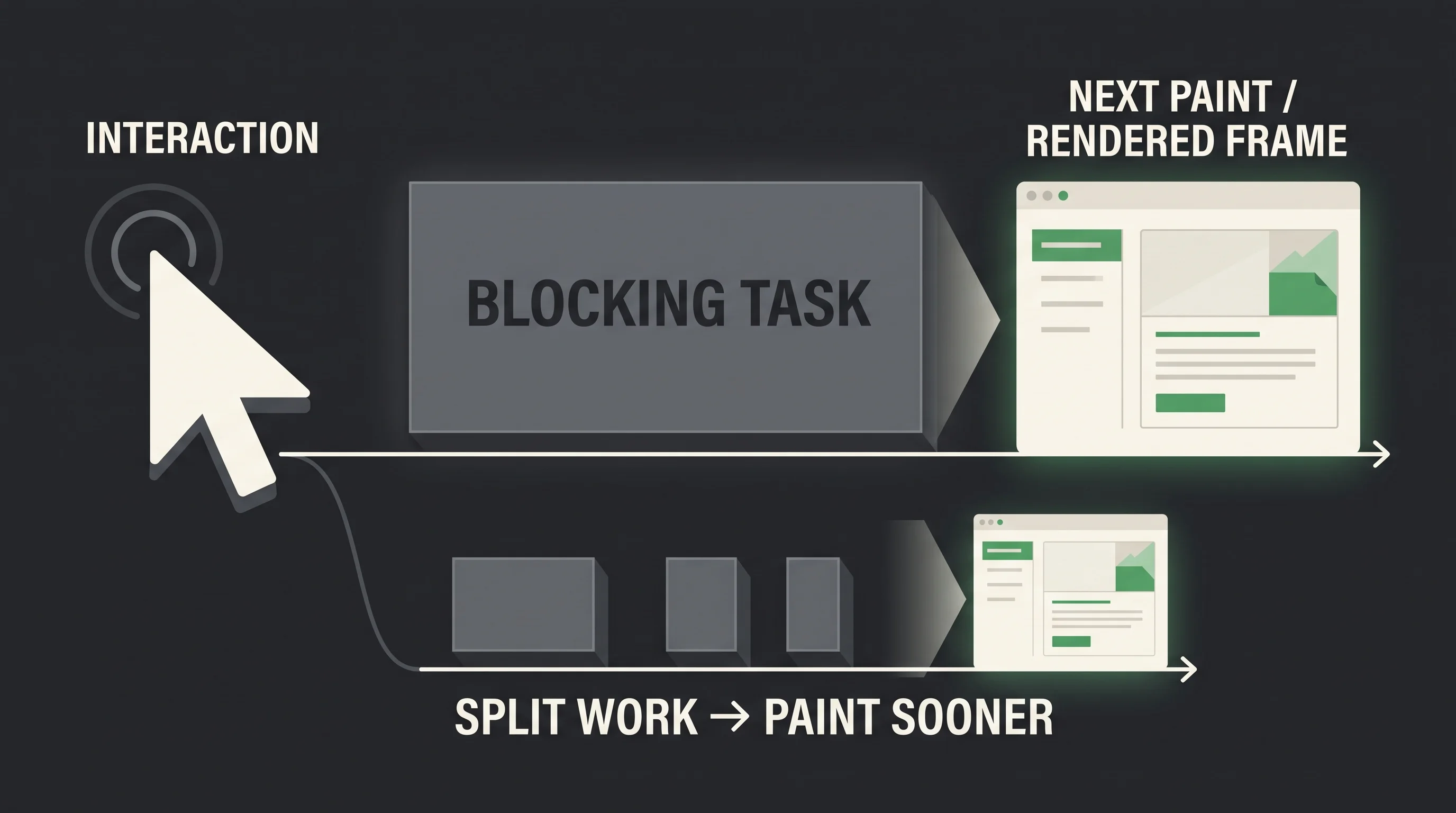
Move from a field warning to one interaction, a trace-backed change and a correct result. Includes a local lab with a timer fallback.

A root-cause LCP debugging guide: identify the actual LCP candidate, split the metric into four subparts, fix image bytes, discovery, priority, server and rendering bottlenecks, then validate the result with real users.
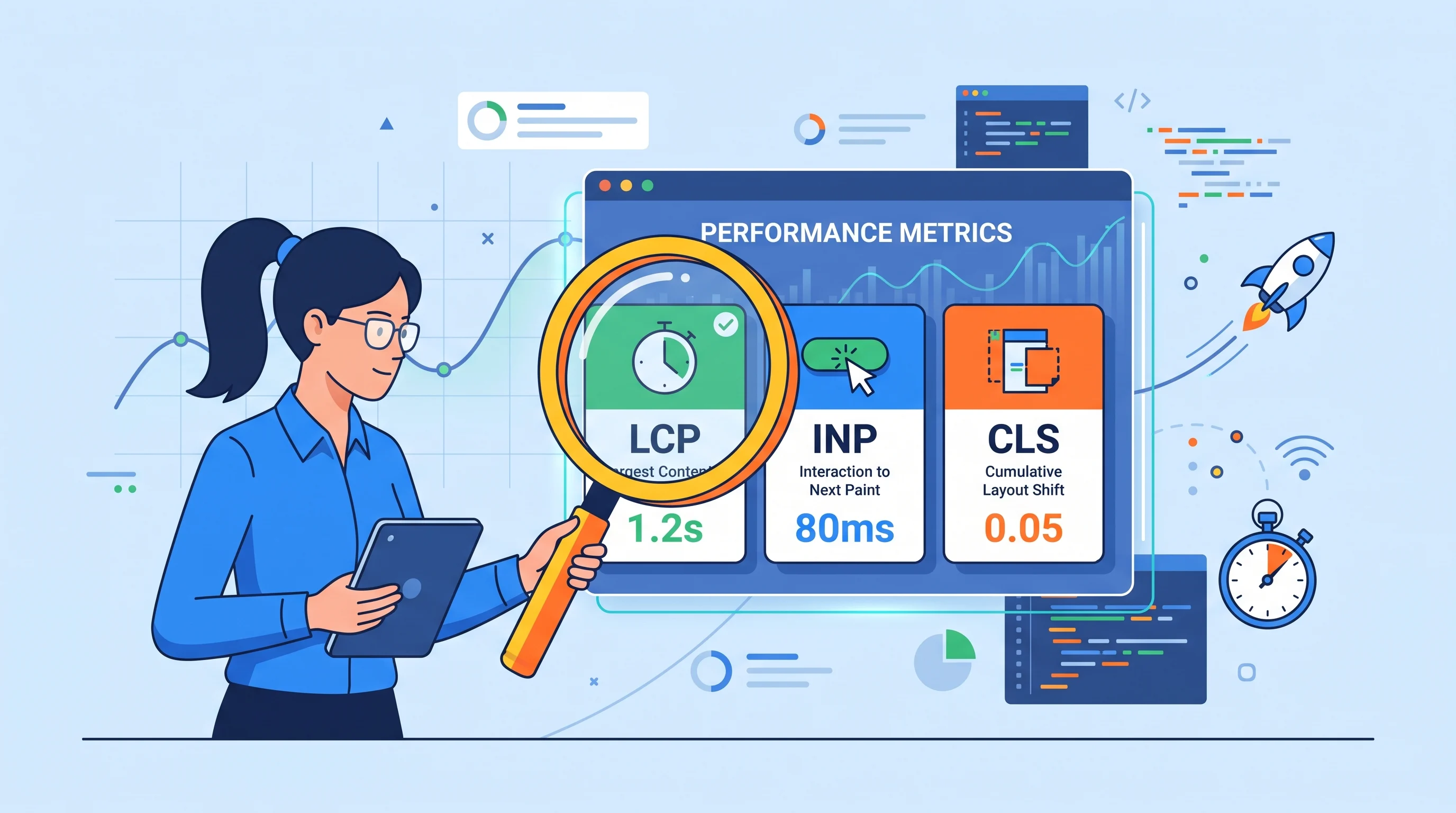
A field-first Core Web Vitals testing framework for deciding what CrUX, PageSpeed Insights, Lighthouse and first-party RUM can actually prove—and how to move from a real-user signal to a reproducible fix.

Treat redirects as a URL-state migration contract: choose status semantics deliberately, map every old URL to an equivalent final destination, align canonical signals, and gate releases with reproducible validation.

A decision-ready SEO reporting framework for combining search demand, technical eligibility, page experience, links, user behavior and business outcomes without mixing incompatible metrics.

An engineering framework for programmatic SEO: define the search task, version the source data, decide page eligibility before rendering, automate preflight QA and expand only after cohort validation.
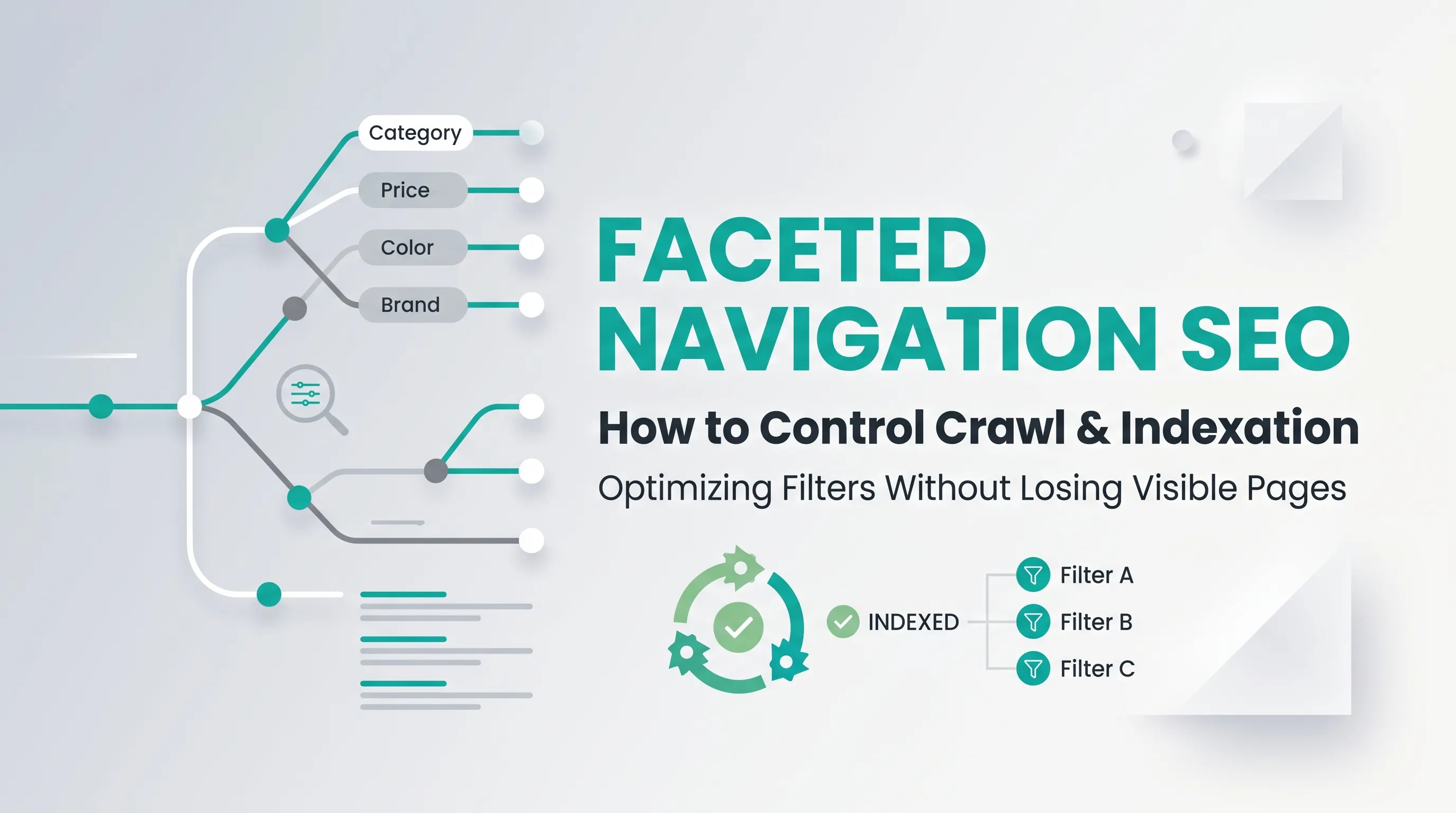
A reproducible faceted-navigation workflow: map the URL grammar, decide which filter states deserve search landing pages, stop useless crawl paths, and validate the result with logs and Search Console.
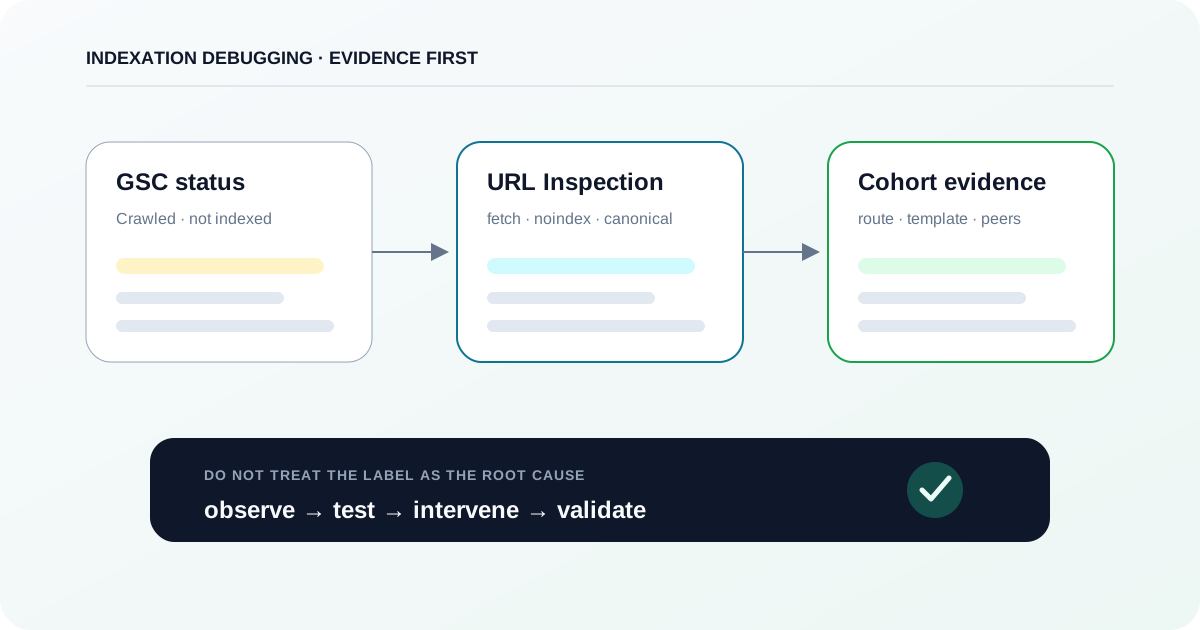
An evidence-first workflow for Crawled — currently not indexed: confirm the current URL state, classify cohorts, rule out technical and duplicate causes, test value hypotheses and validate one intervention at a time.
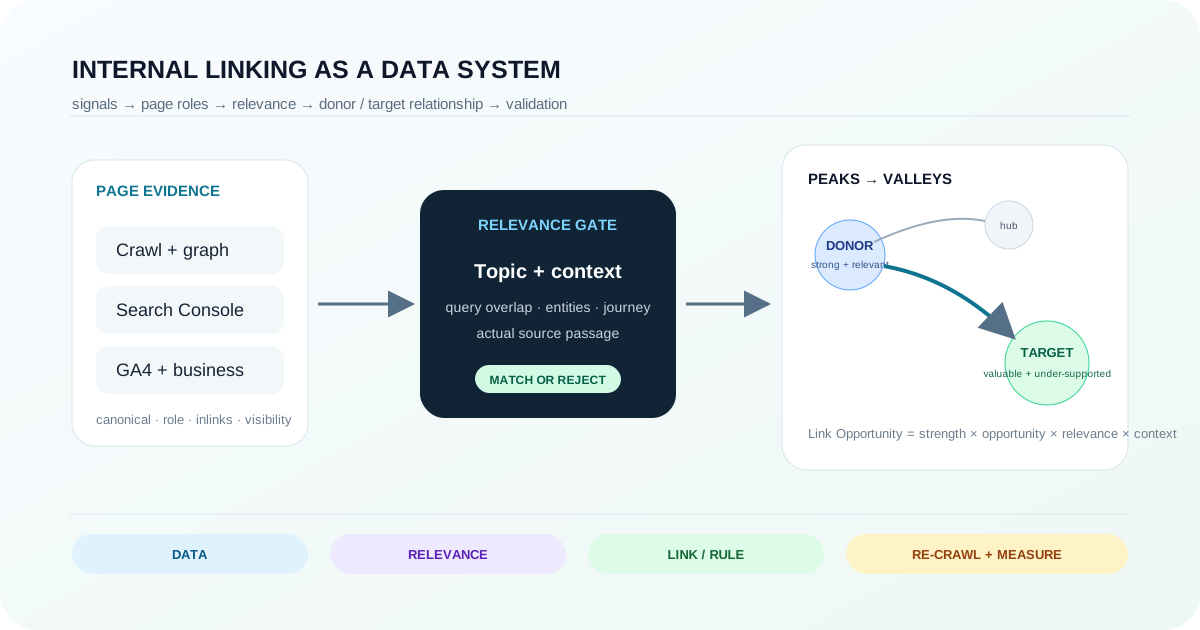
A data-driven internal linking methodology: model the site as a graph, find strong donors and under-supported targets, match them by relevance, automate safely and validate the result.
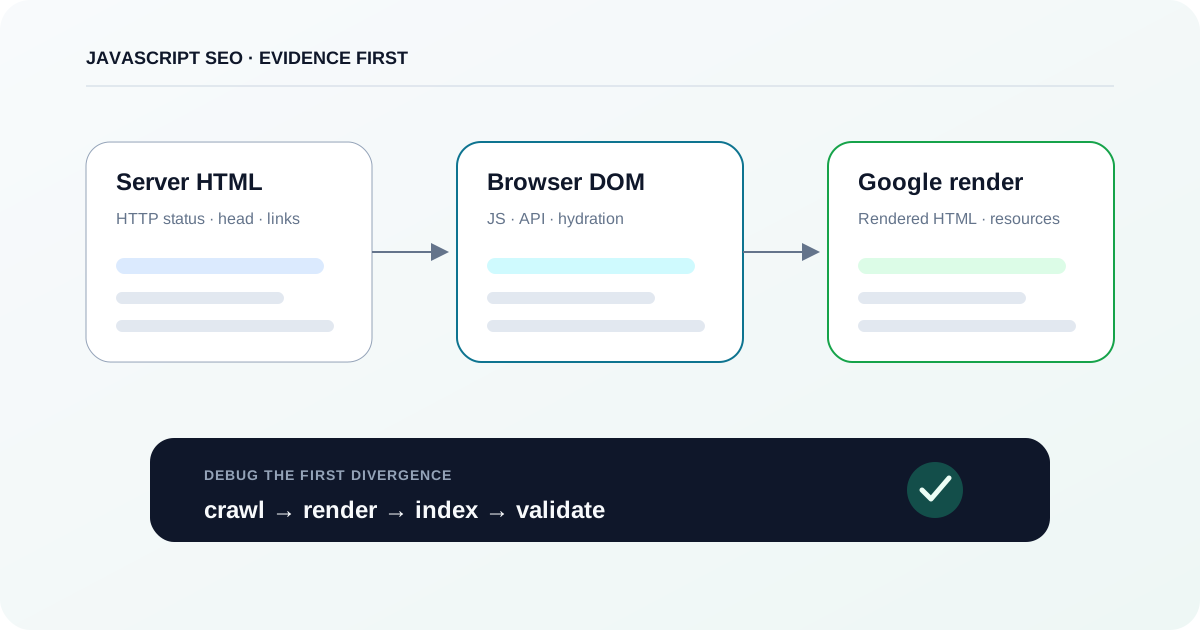
An evidence-first JavaScript SEO workflow for SPA, SSR and hybrid sites: compare server HTML, browser DOM and Google-rendered output before changing the rendering architecture.
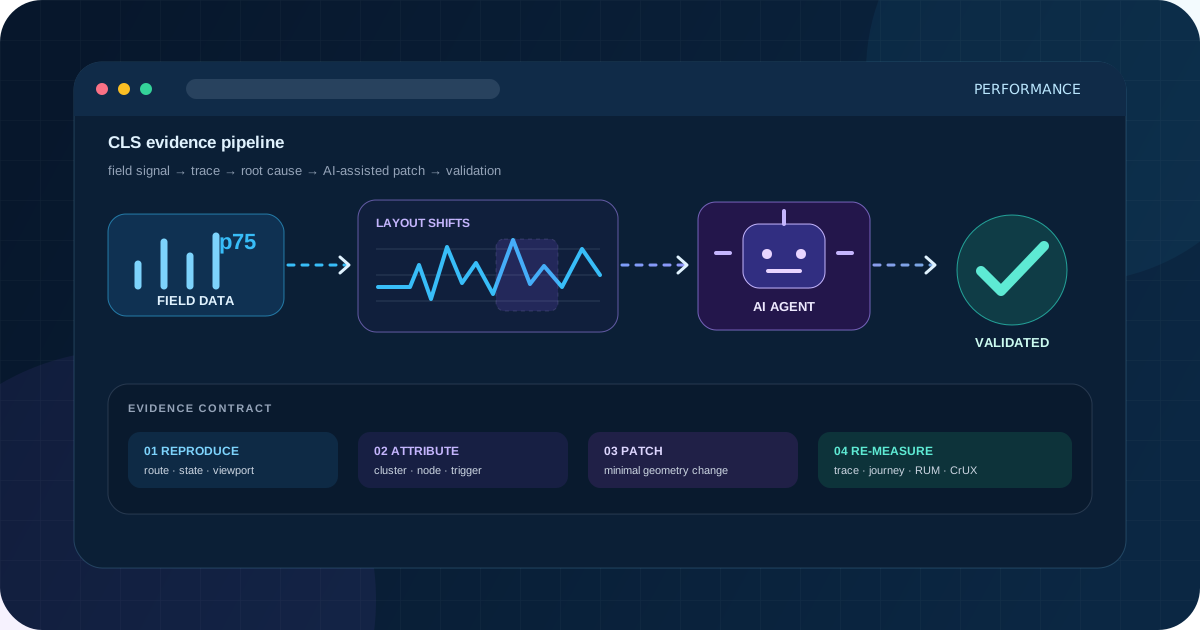
An evidence-first CLS debugging workflow: start with CrUX and Search Console, isolate the largest shift cluster, use DevTools AI or an MCP agent carefully, then verify the fix in RUM.

42 technical SEO checks with exact menu paths, sample rules, pass criteria, evidence to save and a repeatable verification workflow.